All Consumer Economy & Labor Articles
How economic forces are experienced by humans—the "lived economy." What things cost, who can afford them, and how workers are responding.
14 articles

Putting Down the Device: AI's Demand-Side Reckoning
The AI build-out has two famous bottlenecks: power and concrete. A third is rarely priced — demand. The danger is not that people abandon AI, but that they use it everywhere while paying for it nowhere, leaving a trillion-dollar wager resting on a habit that never becomes a business.
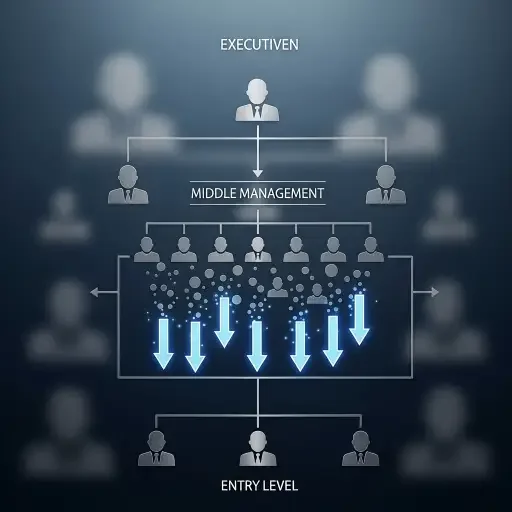
AI Layoffs Target Middle Management as Potential Beats Performance
Over half of executives now expect AI-driven job losses, but the target has shifted from entry-level repetition to mid-tier knowledge work. January's 25,000 tech layoffs and Oracle's planned 30,000 cuts signal a bet on agentic AI replacing managerial judgment—except the technology isn't ready. The result: companies are destroying organizational capacity to fund infrastructure for automation that may take years to deliver.
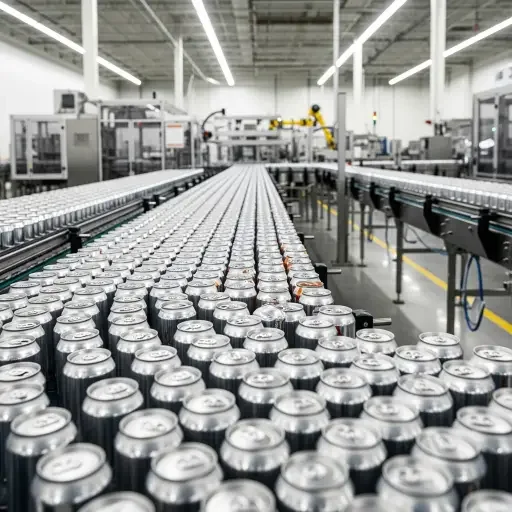
AB InBev Reclaims US Can Plants in $3B Vertical Bet
AB InBev is acquiring several U.S.-based can manufacturing assets for roughly $3 billion, repositioning an erstwhile outsourced input into a controlled supply-line. The deal is less about immediate synergies than about certainty — securing packaging capacity, cushioning commodity swings, and protecting distribution in an era of fractured logistics.
Insider Moves and Regulatory Scrutiny at Lakeland Industries
Lakeland Industries faces renewed investor scrutiny after a cluster of insider share sales and purchases overlapped with fresh Financial Conduct Authority inquiries. The sequence—timing, counterparties and disclosure cadence—raises governance and market‑abuse questions for a small-cap specialist whose pandemic-era sales growth has cooled.

Telework as Reasonable Accommodation: The New Legal Baseline
Courts and agencies have begun treating telework not merely as convenience but as a legally reasonable accommodation under disability law. That shift forces employers to rearchitect policies, risk models, and talent strategies to align compliance with shareholder value.

Nike’s Wholesale Return: Momentum, Margins, and the Logistics Hinge
Nike's consumer demand and brand metrics are showing recovery, but profitable scale depends on wholesale re-engagement and a narrowly solvable logistics problem: inventory arriving at the right place, at the right time, at predictable cost.

Transforming Hiring: New York Bans Credit Checks for Job Applicants
New York state joins a growing coalition of jurisdictions restricting employers from using consumer credit histories to screen job applicants. The policy, aimed at reducing bias and widening access to opportunity, signals a shift in how companies evaluate risk, reward, and resilience in a labor market redefined by rising automation, student debt, and wage stagnation.

Before the Bills and After the Markets: America's K-Shaped Reality in 2025
In late 2025, the U.S. economy presents a paradox: stock indexes rally on policy pivots and earnings optimism, even as labor demand cools, layoffs rise, and consumers struggle with persistent price pressures where it matters most.

Before the Doorbell Rings: America's K-Shaped Economy at Street Level
In late 2025, a $300 Walmart grocery order was stolen before it ever reached the porch. No delivery photo. No confirmation ping. Just a manager calling to ask whether the food had arrived. It hadn't. The disappearance isn't a crime story so much as an economic one—an example of how strain, inequality, and uneven recovery now surface inside ordinary logistics.
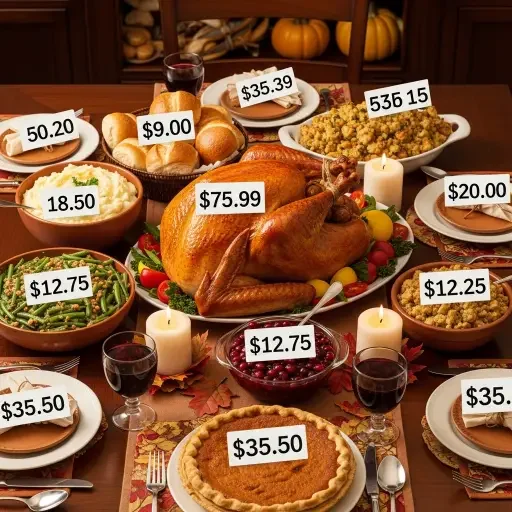
How Thanksgiving Prices Reveal America's Broken Supply Chains
Thanksgiving 2025 exposes the fragile architecture of American food systems—where climate shocks, tariff cascades, and disease outbreaks converge to transform holiday staples into economic indicators of supply chain dysfunction.

Thoughtful Gourmet Gifts: Chefs Pick 17 Culinary Magnets
A chef-curated roster of 17 gourmet gifts that hold their value beyond trends. Here, we distill hype into tangible, enduring assets for the kitchen—each item selected for flavor integrity, versatility, and storytelling power.

Entitled to Equal Pay: How Remote-Work Geography Became the New Legal Minefield
The shift to remote work was supposed to flatten differences; instead, it has quantized them. Employers cutting salaries by geography are tripping into a tangle of statutes, civil rights concerns, and practical risk for talent retention. This piece traces how location-based pay decisions create legal exposure, elevating questions of equal pay, opportunity, and the moral economics of distributed labor.

The Asymptotic Divergence: When Machines Learn Faster Than Humans Can Adapt
946,426 job dismissals in nine months. AI-attributed losses accelerating 55%. The displacement velocity now exceeds human adaptation capacity—and September's 7,000 AI dismissals in a single month suggest we've crossed the inflection point.
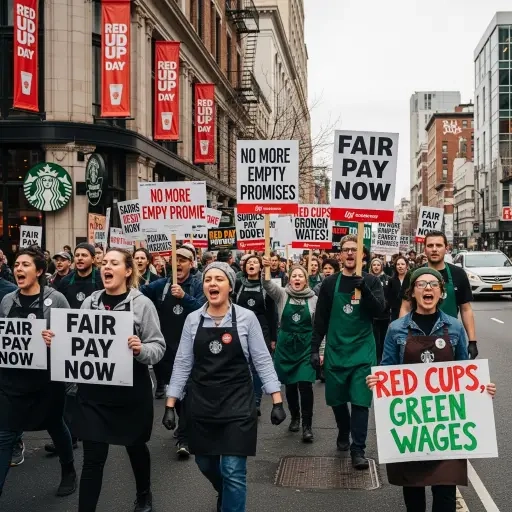
Starbucks Strike Expands Across 25+ Cities: Will Your Morning Coffee Cost More?
A wave of strikes across more than 25 U.S. cities has thrust Starbucks into the center of America’s new labor realignment. For investors, it raises a sharper question: can a company built on emotional loyalty withstand a reckoning over economic fairness?