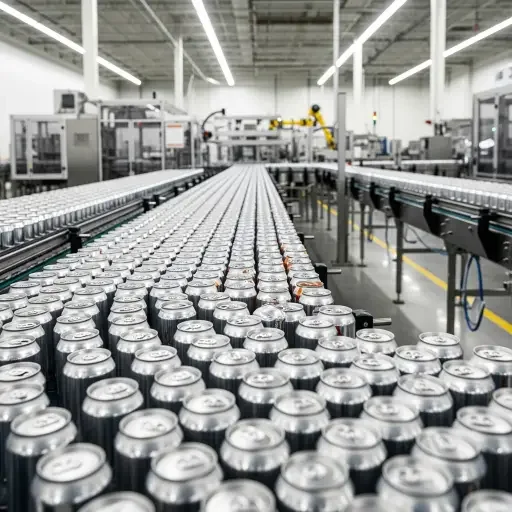
AB InBev is buying back U.S. can-manufacturing capacity in a roughly $3 billion transaction that rewrites a basic assumption of modern consumer-packaged-goods operations: packaging can be treated as a commodity purchased on the open market. For the world’s largest brewer, the calculus is pragmatic and unmistakable — owning the metal and the lines that shape it buys rhythm and predictability into an otherwise noisy supply chain.
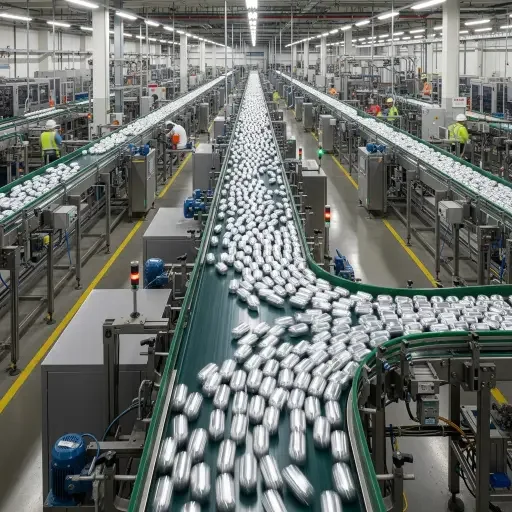
Why spend billions on what used to be a supplier relationship? Three forces converge. First, aluminum and tinplate — the raw inputs for cans — have experienced sharp commodity cycles and concentrated supply sources. Second, transportation and labor disruptions make timely delivery of packaging a nontrivial risk to continuous brewing and distribution. Third, the economics of scale for mega-brewers favors capture: incremental improvements in yield, recycling, and logistics compound across hundreds of millions of cans.
Aluminum price volatility swings gross margins on canned beverages more than many realize. When LME prices spike or tariffs reshuffle trade flows, a brewer that must pass costs downstream risks market share; a brewer that internalizes the input can absorb or hedge that volatility. AB InBev’s move is a capital-intensive hedge — buying optionality and control, not merely assets.
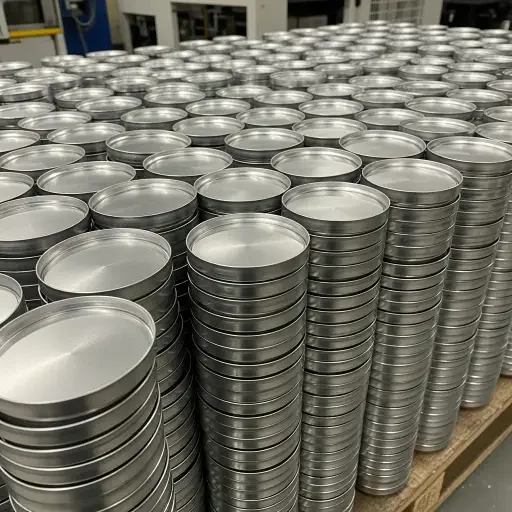
Operationally, the benefits are layered. Owning plants reduces lead times between can production and filling lines, letting AB InBev tune inventory lower while keeping service levels high. It opens opportunities for site co-location: breweries adjacent to can lines cut intermodal handling, reduce damage, and save freight. It also tightens the circular-material loop — a brewer can better orchestrate can recycling and remelting when it controls both ends of the funnel.
This is not naive verticality. The business of can manufacturing has its own cyclicality: capital-intensive equipment, bespoke tooling, and thin margins that historically made it sensible to outsource. AB InBev’s projection likely depends on extracting cross-plant efficiencies, modernizing older lines, and applying scale to thin margins through centralized planning. The company’s real bet is managerial: can it operate what it formerly bought while keeping the throughput economics superior to third-party suppliers?
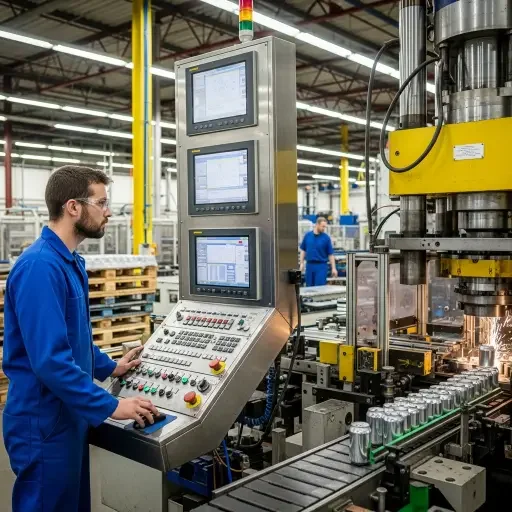
There are strategic externalities worth noting. Competitors will watch closely. If AB InBev can run integrated can plants economically, it sets a tacit floor for packaging reliability across the industry — and creates a competitive wedge where rivals either pay a premium for assured supply or scramble to replicate the vertical stretch. For bottlers and smaller breweries, this raises the stakes of long-term contracts and might accelerate consolidation among regional can presses.
Labor and politics are a second-order but nontrivial layer. Can plants are manufacturing jobs embedded in communities; ownership changes reverberate through local labor markets and union relationships. AB InBev’s integration will prompt operational harmonization, which can mean investment and job preservation in some towns, and rationalization in others. For regulators, a major brewer owning domestic packaging capacity will invite scrutiny over access and anticompetitive implications if the company ties distribution preferences to internal supply.
Financially the transaction signals a shift in capital allocation philosophy. Historically, consumer staples redirect cash to brand-building or incremental productivity improvements. Placing $3 billion into manufacturing capacity is a move away from pure marketing-led returns toward supply-side insurance. Investors will parse the implied return-on-capital: whether the acquisition yields margin protection and volume stability sufficient to outpace the opportunity cost of those dollars. If commodity cycles and logistics shocks intensify, the defensive value becomes clearer; if markets normalize, the cost of idled capacity could weigh.
The timing matters. Global trade fragmentation, episodic port congestion, and labor tightness in U.S. manufacturing converge into a higher premium on assured domestic production. The COVID-era lessons remain lodged in corporate memory: inventory buffers are expensive, and single-source dependencies are risky. By internalizing a critical physical input, AB InBev buys control of lead times and mitigates one channel of systemic vulnerability.
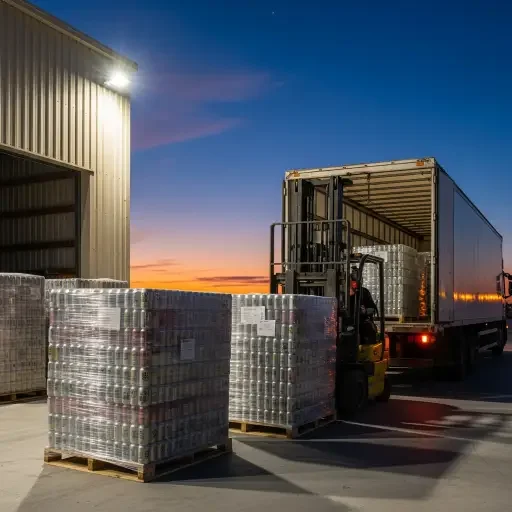
There are execution risks. Integration requires capital expenditures to modernize older presses, systems to coordinate production across geographies, and management expertise in a line of business that, while adjacent, is operationally distinct. The company must avoid the classic trap of under-investing in maintenance while expecting efficiency gains. Moreover, the optics of a dominant brewer controlling packaging raise potential for regulatory pushback; transparency in access and fair contracting will be politically salient.
Still, the strategic logic is coherent. For brands whose product is intrinsically local — regional lagers, seasonal runs, limited-edition releases — control of packaging equates to control of availability. For AB InBev, whose portfolio stretches from global staples to craft hybrids, the can is both container and conduit: a physical assertion of supply certainty that underwrites marketing promises.
What should investors watch next? First, capital expenditure guidance and integration milestones: modernization plans, planned cost synergies, and expected capacity utilization rates. Second, customer access: whether AB InBev opens internal capacity to third parties or leather-closes supply lines to favor its own brands. Third, margin behavior through commodity cycles: does owned capacity reduce net volatility in beverage gross margins versus peers?
In sum: this is not romantic vertical integration. It is insurance bought with industrial scale. AB InBev’s $3 billion reclaim re-prioritizes control over convenience, turns packaging into a strategic asset, and tightens a chain that had frayed in recent years. The can, once a simple container, becomes a lever to manage cost, distribution, and competitive friction — and for a beer giant, that is a defensible place to put capital.
AB InBev’s gamble is straightforward: pay up front for certainty. If the industrial and geopolitical winds keep buffeting supply chains, the premium will feel modest; if turbulence subsides, the brewer will need to show these can plants are productive businesses in their own right. Either way, the dinner-table conversation about who controls what in your fridge just got more interesting.
Tags
Related Articles
Sources
Company filings, manufacturing industry analysts, commodity price histories, logistics reports, and interviews with packaging executives.