

The Policy Shift
New York has turned a quiet line in a policy brief into a loud statement on opportunity, risk, and fairness. The state legislature, echoing a broader global chorus, concluded that the pre-employment screening instrument—credit history—often penalizes those who already carry financial fragility. The ruling, effective immediately for many sectors, forbids employers from requesting or using consumer credit reports during the hiring process. It also curtails requests for past financial information that would reveal a candidate’s creditworthiness. The aim is simple in intent and ambitious in reach: widen access to opportunity without sacrificing the integrity of the hiring decision.

Risk Assessment Reconsidered
The rationale rests on a robust, if contested, theory of risk assessment. Employers argue that credit history can illuminate fault lines in financial discipline, which might loosely translate into job performance. Critics push back, noting correlations exist in some studies between bankruptcy episodes and certain stress-responsive roles, but the causal logic remains imperfect and noisy. The New York measure does not demand a perfect predictor; it seeks to decouple personal finance from professional potential. In a labor market seasoned by automation, gig futures, and wage volatility, equity in access becomes a strategic asset, not a mere social virtue.

Corporate Adaptation and Alternative Signals
From a corporate vantage, the policy reframes the talent war with a more level playing field. Companies that previously screened out applicants on the basis of minuscule delinquencies or colorfully named credit events now must pivot toward alternative risk signals. Several large firms have already been adjusting: expanding structured interviews focused on problem-solving, adding work-sample tasks, and leaning into behavioral simulations that illuminate resilience and collaboration without peering into a candidate’s consumer ledger. For investors, the shift is a reminder that people, not credit scores, are the fulcrums of long-term value creation. Talent is a compound, not a debt score.
But the transition isn’t without friction. Human-resources executives report concerns about compliance overhead, potential batch processing delays, and the risk of hidden biases migrating into new screening devices. If not credit checks, what signals will replace them? Some firms are leaning on standardized assessments of financial literacy and budgeting discipline—variables that can be ethically measured without amplifying discrimination. Others are embracing more transparent hiring dashboards that document decision criteria in audit trails, offering an external guardrail against arbitrariness.

Broader Social Implications
The policy also reframes the employer-employee relationship in a broader social context. Financial health in the modern economy is not merely a personal concern; it’s a macro-architecture problem—student debt, rent burdens, and medical expenses shape the supply chain of labor. When a state bans one of the most blunt instruments of risk assessment, it shifts the incentive structure: firms must invest more in onboarding, training, and workplace supports if they wish to attract the same caliber of talent. This is not charitable grace; it’s strategic design. A workforce that feels seen and fairly evaluated tends to stay longer, contribute more, and weather downturns with more resilience.

Early Adopter Responses
For early adopters, the adjustment is already underway. Startups and scale-ups, often resource-constrained, are piloting lightweight, credit-free evaluation protocols that emphasize demonstrable outcomes over historical financial footprints. Public-facing hiring platforms now feature clearer disclosures about what signals are used and how candidates will be evaluated. In turn, this transparency feeds a calmer, more predictable application process, reducing friction for applicants who, historically, faced opaque hurdles.
Yet benefit accrual is not automatic. Public and private sectors alike will need robust communications strategies to explain the policy’s rationale to candidates, recruiters, and investors. Misunderstanding can generate churn: more inquiries, more disputes over eligibility, and a potential uptick in applicants who exploit loopholes or game the system with counterfeit documents. The risk calculus, re-engineered around fairness, must be paired with monitoring systems that detect unintended biases in the new screening tools.

National Ripple Effects
Looking ahead, the New York move could trigger a domino effect. If the policy reduces candidate rejection on the basis of debt-related markers, similar reforms may spread to neighboring states and beyond. Global firms with U.S. footprints might standardize their practices to ensure consistency across locations, balancing compliance with the imperative to maintain diverse pipelines of talent. In the fast-evolving world of work, where autonomy and risk are intertwined, a move away from credit-based screening has the feel of strategic clarity—an invitation to measure what matters: capability, character, and the tacit competencies that machine dashboards cannot capture.
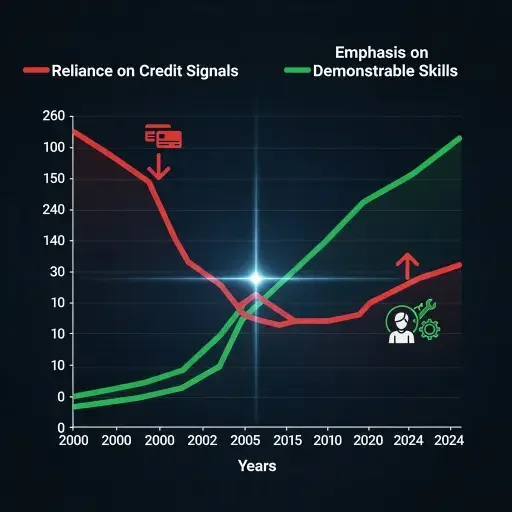
As the market absorbs this shift, the real metric of success will be retention and performance alignment. The policy’s true test is not whether it removes one tool from the HR toolkit, but whether it creates a more truthful mapping from potential to performance. If the workforce grows more inclusive without sacrificing accountability, the policy becomes a public good—an economic efficiency achieved through moral clarity. If not, it will require recalibration: more refined measures, better onboarding, and a governance framework that ensures fairness remains the North Star.
End with a succinct synthesis. The central proposition is that credit checks, while historically convenient proxies for risk, are poor substitutes for genuine hiring signal. New York’s ban reframes risk from personal finance to professional potential, inviting a more transparent, capable, and resilient labor economy.
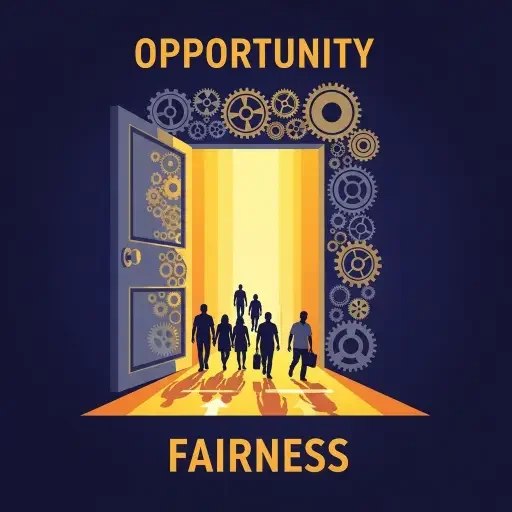
In sum, the silent talent war moves from debt-weighted judgments to capability-based selection. Institutions that align with this shift—through transparent criteria, investment in onboarding, and rigorous monitoring—may discover not only fairness but superior performance as a byproduct. The money, as it tends to be, follows the people.
Tags
Related Articles
Sources
Policy memo from New York Department of Labor; interviews with HR executives; wage data from Bureau of Labor Statistics; court filings related to prior credit-check lawsuits.