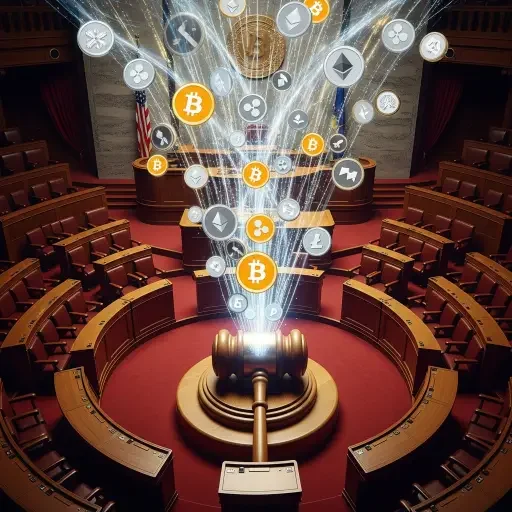
The Senate’s latest flirtation with a crypto “clarity” bill has changed from niche procedural skirmish to a measurable market variable. Republican interest has thawed in places it didn’t three months ago; a draft circulated by Senator Tim Scott functions as the operational hinge; and investors are pricing the possibility that Washington will rewrite the playbook for token classification, exchange listings, and enforcement priorities.
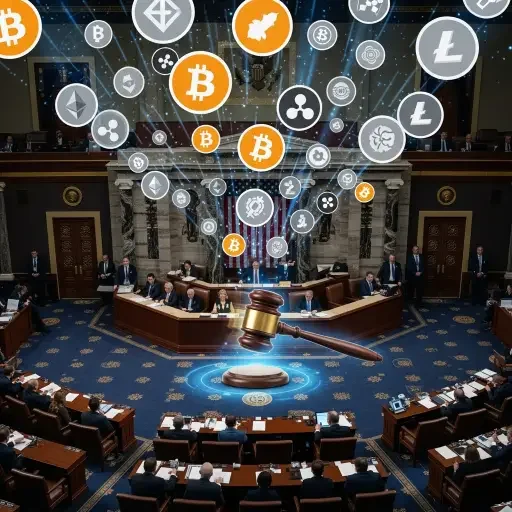
Why this matters now: the differences between defining a token as a security or not are not semantic. They determine which agency — the Securities and Exchange Commission or a lighter-touch alternative — controls registration, disclosure, and enforcement. For founders and exchanges, that binary changes the cost of compliance and the liquidity of secondary markets. For institutional allocators, it changes custody, custody-provider risk, and the calculus on whether to list a product or buy a token.
Republican dynamics are the proximate political engine. Where last year Republicans were split between deregulatory instincts and constituency pressure from crypto-friendly donors, an emergent coalition is coalescing around the politics of clarity rather than permissiveness. That coalition sees value in a clean statutory line: it limits agency discretion (a politically saleable promise) while offering predictable rules that ease capital formation for U.S.-based firms.
Sen. Tim Scott’s draft is consequential because it trades a broad substantive rewrite for surgical fixes: narrow safe harbors for staking and programmatic activity, a tests-based carve-out for certain utility tokens, and an express statement that lending and custody, as practiced in DeFi, are subject to distinct oversight. The bill’s architecture tries to thread three needles at once—curtail SEC enforcement over marketplaces of certain tokens, provide legal cover for market infrastructure, and avoid a wholesale deregulatory signal that would offend moderates and Democrats.

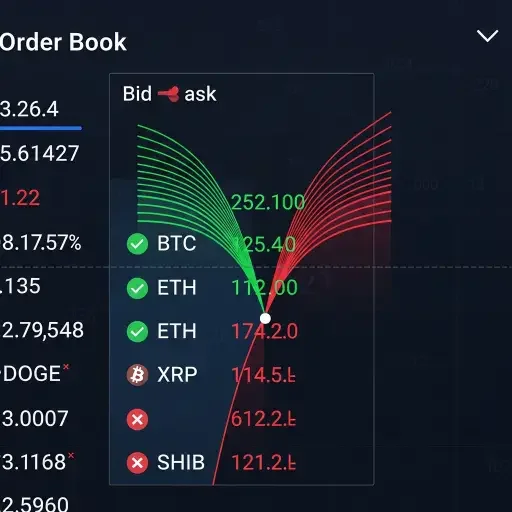
Markets have reacted in calibrated ways. Exchange order books show increased speculative interest in tokens likely to be treated as non-securities under various draft formulations; secondary market spreads tighten for assets perceived as near-term “clarity beneficiaries.” Meanwhile, venture capitalists are accelerating exits for projects that risk being swept into securities regulation—where a retest in court could mean prolonged illiquidity and legal expense.
The most immediate market lever is listings. Exchanges look for legal comfort before listing new tokens; a statute that narrows the securities definition reduces listing friction, and therefore reduces the time from token issuance to tradability. That compresses funding cycles and raises realized returns for founders. Conversely, a statute that broadens SEC authority or leaves ambiguous language could freeze listings, drive projects offshore, and steepen liquidity discounts.
A second lever is enforcement shadowing. The SEC’s posture under recent leadership has been aggressive: enforcement actions that use the Howey test to claim many tokens are securities. Legislation that codifies a different test—or explicitly limits SEC authority in areas like staking or decentralized governance—would shrink the agency’s toolkit. That reallocation of enforcement risk affects pricing: lower expected legal risk raises valuations; uncertainty suppresses them.
The politics, however, are brittle. Moderate Republicans worry about being painted as yielding to industry money or enabling fraud. Democrats, remembering investor losses and exchange collapses, demand investor protections: mandatory disclosures, custody standards, and a preserved role for the SEC. The Scott draft’s procedural modesty helps here—its detail allows negotiators to bargain over carve-outs and thresholds instead of binary “security or not” fights.
Hidden in the legalese are market-moving thresholds. Two phrases markets are watching closely: “investment contract” redefinition and the treatment of algorithmic tokens. Widening the statutory language around what constitutes an investment contract would expand the SEC’s reach; codifying tests that privilege decentralization or functional utility would narrow it. Algorithmic tokens—whose value depends on protocols rather than cash flows—pose an edge case that could define dozens of projects’ futures.
Capital markets have already adjusted. ETF gatekeepers, institutional custodians, and prime brokers are modeling scenarios where different token classes have distinct custody and capital requirements. Some custodians say they could offer segregated custody for tokens legally deemed commodities or utilities, but would refuse or reprice custody for tokens classified as securities. That distinction matters for issuers contemplating a U.S.-based IPO-style path vs. a token-first liquidity event.
The bill’s procedural timeline will matter more than any single clause in the near term. If Scott’s draft is used as a base text and negotiators agree to an open amendment process, markets will price in a longer period of uncertainty but a higher probability of compromise. If leadership fast-tracks a narrow package—possibly exempting certain activities—the market reaction will be sharper but more directional: clarity for some, cliff risk for others.
For investors the practical checklist reduces to three items: 1) token legal classification sensitivity—identify holdings most exposed to securities reclassification; 2) counterparty risk—reevaluate exchanges and custodians whose business models rely on ambiguous regulatory treatment; and 3) liquidity horizon—stress-test scenarios where listings pause or delistings occur.

Legislative outcomes rarely map cleanly onto market models, but this moment is different because the market already treats statutory language as a lever. The interplay of Republican coalition-building, Tim Scott’s procedural draft, and capital reallocation has converted a legal argument into a pricing event. For founders, exchanges, and investors, the immediate task is not to predict the exact text but to map exposures and keep capital nimble.
If Washington writes clearer rules, U.S. crypto markets stand to gain durability: more listings, stronger institutional involvement, and faster fundraising cycles for compliant projects. If clarity fails, capital will reprice toward jurisdictions with friendlier—or at least more predictable—regimes. Either way, the bill will be remembered not for its prose alone but for how it redistributed risk across regulatory, market-structure, and political fault lines.
Tags
Related Articles
Sources
Reporting synthesizes public drafts, Senate staff briefings, market data on token listings and ETF flows, and interviews with lawyers and investors.