

The Gathering
In a town where power lunches increasingly mingle with after-hours debates about automation, the latest gathering had the texture of a modern rite of passage. A curated cross-section—venture financiers, chief compliance officers, think-tank researchers, and a handful of policy advisers—convened at a private club off Madison Avenue. The topic was not a single bill or a single product; it was a map: how policy risk, DEI funding, and the next wave of AI-enabled productivity might co-evolve in the near future.
The table—sleek, elongated, with a garnish of microgreens and the soft clink of glassware—set the tone. This was not a typical policy roundtable, either. It was a high-signal venue where ideas were measured against investment horizons, and where the ethics of inclusion were weighed against the arithmetic of return. The dinner’s unspoken premise: if DEI funding can be justified as a driver of long-run resilience, then AI-enabled productivity can be framed as a productivity dividend—a way to compress time, unlock tacit knowledge, and redraw the margins of risk.
A few guests spoke with a cadence that suggested rehearsals and caution. A senior partner characteristically framed risk as a triad: operational exposure, reputational volatility, and regulatory ambiguity. She argued that risk governance will need to mature in parallel with the deployment of AI tools, especially in sectors where automated decision-making intersects with human welfare and consumer trust. In parallel, a policy adviser laid out a two-tier logic: invest in DEI not as a social gloss but as a capital discipline. Teams with diverse inputs tend to surface edge-case scenarios earlier, reducing downstream costly errors in complex AI deployments. The claim was not that DEI is a silver bullet; it is that inclusive design, when paired with rigorous measurement, can improve model reliability and organizational learning.

The AI Productivity Dividend
Another thread focused on AI’s productivity dividend—how new workflows, data pipelines, and decision-support tools can compress cycles without eroding human oversight. A veteran tech strategist drew a line from enterprise software’s productivity spurt in the 2010s to today’s AI-assisted knowledge work. The difference, she argued, is scale and context: modern AI can distill and disseminate tacit know-how across global teams, but it requires governance that pairs guardrails with incentives for continuous learning. The table nodded, simultaneously wary of hype and hungry for a credible blueprint.
The more provocative lines centered on the ethics and governance of DEI funding as it intersects with AI. Debates circled around accountability: who bears the cost when inclusion programs don’t translate into measurable outcomes? Who validates the long-term social return on DEI investments when AI accelerates shifts in job design and required skills? Several participants pressed for what one financier called “outcome transparency”—clear metrics, independent audits, and a timeline that aligns DEI spend with tangible workforce improvements. The implication was not anti-DEI; rather, it was the demand for a rigorous, data-informed narrative—one that can withstand the crosswinds of market scrutiny and political change.
Contingency Planning and Governance
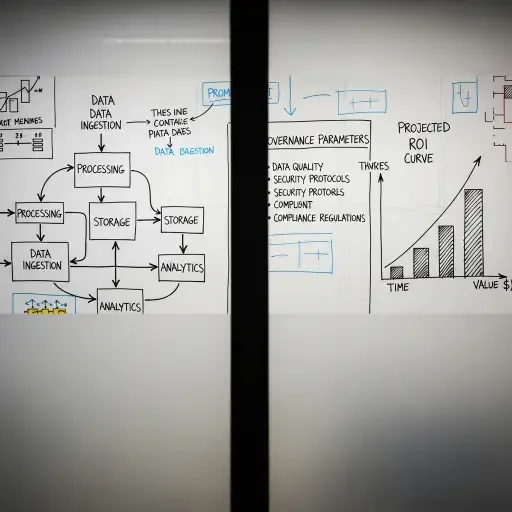
Around the dessert course, the mood shifted to contingency planning. Several attendees outlined scenarios—gray swans, as one guest put it—where policy shifts, consumer pushback, or supply-chain constraints alter the ROI calculus of AI investments. The consensus was pragmatic: build modular governance into AI projects, preserve optionality in DEI funding, and cultivate leadership that can translate complex data into policy-relevant decisions. In this sense, the dinner’s most durable takeaway was a philosophy of restraint married to ambition: push forward with productivity-enhancing AI, but do so with a calibrating instrument—clarity on risk, verifiable impact of DEI, and an insistence on human-centered oversight.

The Future of Work and Governance
The closing conversations leaned into the future. If the AI productivity wave proves generative across industries, what does that require from boards, policymakers, and workers? One theme: adaptive governance. The group nudged toward frameworks that can evolve as AI capabilities scale, with metrics that track learning curves, worker retraining, and the diffusion of benefits beyond initial high-skill sectors. Another theme: legitimacy through inclusion. If DEI funding becomes a structural feature of corporate strategy, it must be accompanied by transparent reporting, independent verification, and a willingness to revise allocations in light of outcomes. The tone remained aspirational but not naïve: the next phase of productivity—driven by AI and guided by responsible inclusion—must earn social license by delivering measurable value and maintaining human dignity.

As plates were cleared, the conversation felt less like a dinner and more like a rehearsal for a shifting operating system—the implicit architecture of a society that expects more from its tools and from its leaders. The guests departed with collateral: a list of policy questions to be answered, a set of DEI metrics to pilot, and a shared expectation that the AI revolution will no longer arrive with a single proclamation. It will be negotiated, segment by segment, at dinners like this—where risk is mapped, incentives are aligned, and productivity is reimagined through a human-centered lens.
In the end, the evening’s entropy was not chaos but a mutual calibration: a quiet agreement that the path to durable growth lies at the intersection of prudent policy risk, rigorous inclusion, and disciplined deployment of AI. The market will judge the outcome, but the blueprint begins here—in a dining room that blends ambition, restraint, and a respect for the slow art of governance.

”—left as a reminder that decisions in risk and productivity are, at their core, human choices.
Tags
Related Articles
Sources
First-hand accounts from attendees, briefing papers circulated pre-event, and an off-record debrief with a policy adviser.