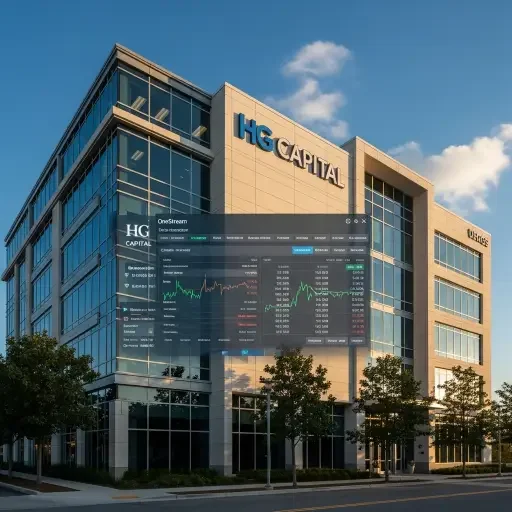
Hg Capital is nearing a take-private of OneStream, the provider of corporate performance-management software used for financial consolidation, planning and reporting. The prospective deal is the latest, and perhaps clearest, evidence that private equity remains convinced enterprise software—especially subscription-based platforms with sticky customers and integration complexity—constitutes a buyout-grade asset class.
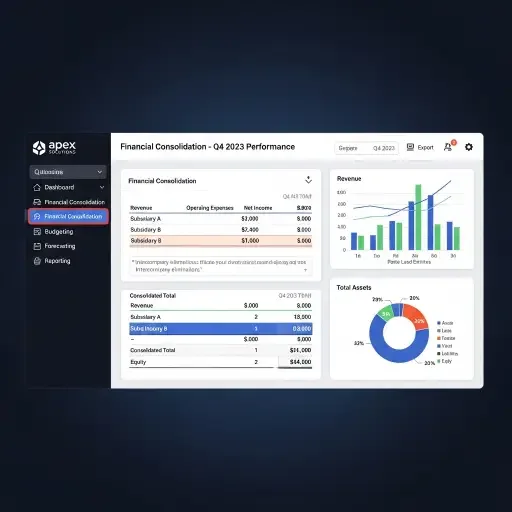
Private-equity firms value software differently than public-market investors. Where the public market frets about near-term growth deceleration, buyout shops price long-duration cash flows and operational optionality. OneStream’s revenues are recurring, customer retention is high, and deployments are typically embedded into a company’s finance stack—three characteristics that compress future cash-flow uncertainty and lengthen the time horizon over which returns compound.
The arithmetic is straightforward: pay a multiple of recurring revenue, harvest cash through fixed-cost leverage and cross-sell, then either exit to a strategic buyer or re-list at a higher multiple once growth has accelerated again. But the subtlety is strategic: not all software “moats” are equal. In OneStream’s case, the moat is procedural and technical—model customization, data mapping, and regulatory-compliant reporting produce switching costs that are costly in time and risk, not only in dollars.

Private equity’s thesis is also behavioral. CFOs dislike change. Finance teams treat core planning and consolidation systems as sacred—the wrong migration can expose a company to restatement risk, audit friction and regulatory headaches. That reticence is the moat’s entropy: friction that reduces churn even when competitors offer superficially superior features.
Hg’s interest follows a pattern: large PE funds have been systematically shifting allocation toward software because of predictable unit economics and multiple arbitrage potential. Over the last five years the buyout market has seen a string of take-privates and minority buyouts of mid-market enterprise-software firms—transactions that are less about “software as sauce” and more about capturing operational levers (pricing, sales efficiency, vertical expansion) while leaning on the product’s built-in retention.
The deal also illuminates how private owners can de-risk certain market perceptions. Public investors often punish companies priced for perpetual high growth yet delivering stabilization; private owners can relabel that stabilization as “mature recurring cash life cycle” and optimize for free cash flow. That re-framing is not merely accounting legerdemain; it changes resources: more predictable cash enables product investment, targeted M&A, and sales-channel reorganization without the short-term scrutiny of quarterly markets.

This is not to suggest the take-private is risk-free. Private equity pays for predictability; the primary risks here are executional. Integrating a growth playbook—retooling go-to-market, compressing sales cycles, and expanding into adjacent modules—requires skilled operating partners and patience. If churn creeps higher, or if regulatory changes force costly rewrites of reporting logic, the moat erodes. Likewise, aggressive financial engineering can backfire if it starves product teams of necessary R&D to keep the platform current.
Another vector is competition from cloud-native challengers and point solutions that unbundle features. Vendors that specialize in planning or consolidation can layer into a customer’s estate with less heavy lifting. The defense against such encroachment is twofold: network effects within a customer (multiple modules and shared data models) and institutional inertia across finance organizations. OneStream’s integrated architecture and consolidation into a single platform is the defensive architecture through which Hg expects to scale pricing and add modules with measurable ROI.
Financially, buyout returns here depend on several knobs: revenue retention, net new ARR, gross margins expansion, and multiple expansion on exit. Private owners can influence three of those directly. They can push retention by improving customer success and product onboarding, accelerate new ARR through sales force specialization and vertical packaging, and expand gross margins via operational leverage and cloud migration if beneficial. Multiple expansion is market-determined, but a cleaner, higher-growth profile post-operational improvements can command a richer exit multiple.
The broader market takeaway is instructive. Private capital is placing a steady bet that the structural economics of enterprise software—subscription revenue, embedded workflows, and high switching costs—generate returns that public markets intermittently undervalue. This behavior shapes the supply side of software: firms that once IPO with the expectation of perpetual multiple expansion may now find the private markets a more hospitable environment to scale.
For founders and management teams, the implication is practical. If your product sits in the mission-critical stack of a large function—finance, HR, supply chain—you carry optionality: public listing, strategic sale, or private-equity partnership. The choice depends on whether the company needs public liquidity or operational reorientation. For investors, the OneStream outcome will be another data point: either reinforcing the durable-software-moat narrative or reminding skeptics that not all subscriptions are equal.
In the end, Hg’s likely acquisition of OneStream is less a bold leap and more a conservative arithmetic play: buy reliable cash flows, apply operational muscle, defend with integration and inertia, and exit when the market pays for the narrative. The private-equity appetite for enterprise software is not fashion; it is incentive-compatible finance aligning capital with predictability—and where that predictability exists, the moat tends to hold.
Consolidated takeaway: recurring revenue plus high switching costs remains a compelling private-equity value formula—so long as execution preserves the product’s technical and institutional lock-in while carefully reinvesting to keep the platform relevant.
Tags
Related Articles
Sources
Deal reports from financial press, public filings for OneStream, Hg Capital portfolio history, industry M&A trends and software valuation literature.