

Europe’s defense theatre has a new protagonist, not a weapon but a blueprint: the Michelangelo Dome. It is not a single launcher, but a networked fabric—sensor, shooter, and policy—woven with the discipline of renaissance geometry and the pragmatism of modern procurement. Think Iron Dome, but tailored to Europe’s legal moorings, industrial base, and political conscience. Think also of a sovereign red—where a nation-state draws a red line around its airspace and says: this is ours, and we will guard it with calibrated, accountable force.
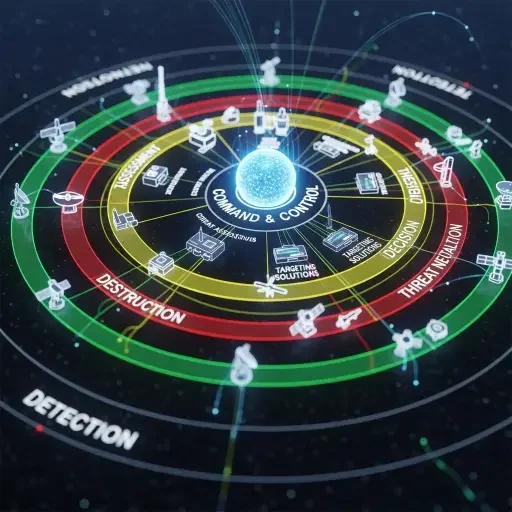
The design philosophy is the opposite of improvisation. It treats airspace as a distributed asset—not a battlefield scavenged from ad hoc tech. The Dome is a multi-layered architecture: passive verification, active interception, and post-event accountability. It borrows from Leonardo’s risk-tolerant precision—the willingness to mix scalar thinking (patterns, probabilities) with tactile, on-ground implementation (manufacturing lines, maintenance hubs). The objective isn’t spectacle; it’s stable control of a chorus of threats—quadcopters, swarming drones, and ephemeral micro-munitions—emerging at the edge of legitimate interest and crossing into cluttered airspace.
In practice, the system is a triad: sensors that map motion with redundancy, decision nodes that fuse data with policy rules, and interceptors that respond with calibrated timing. The “Michelangelo” metaphor is not decorative. It signals a discipline: architecture that distributes weight. Every layer shoulders a portion of the cognitive burden, so the operator—not just the machine—remains in productive command of the situation.
The abstraction-to-reality translation is the hard part. The Dome must be deployable at scale without sacrificing legality or civil liberty. Europe’s internal market is a maze of procurement rules and privacy regimes; hence the architecture uses modular subsystems with standardized interfaces. A common data fabric lets suppliers compete on performance rather than interface complexity. It also enables rapid reconfiguration as the threat calculus shifts—from reconnaissance drones to swarm saturation or autonomous evasion tactics.
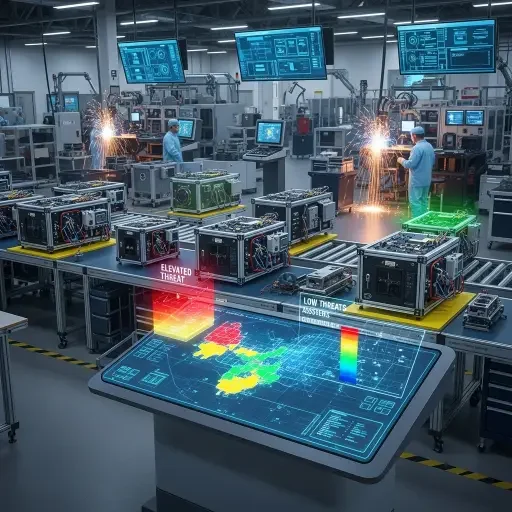
From an investor’s vantage, the project resembles a selective, industrialized defense ecosystem. The Dome incentivizes domestic manufacturing, technology transfer, and export readiness, while embedding safeguards against mission creep. It’s a story of disciplined risk: not chasing every sensor gimmick, but curating a stable stack of proven components with margins for iterative upgrades. The procurement path will favor open interfaces, long-term maintenance commitments, and performance-based contracts that align supplier incentives with real-world outcomes.
Yet this is not purely technocratic. The governance layer matters as much as the hardware. Europe’s sovereign-asset doctrine demands accountability: transparent rules for engagement, privacy-preserving data handling, and a clear chain of command that travels from Brussels to a local airspace. The Dome will be tested in live exercise—fictional threats converted into measurable metrics: detection latency, interception accuracy, false-alarm rates, and the speed of decision cascades through the fusion center. In that testing, Europe seeks to prove a crucial point: security need not be a theater of fear; it can be a model of responsible protection that respects citizen rights and market incentives alike.

The historical echo matters. Iron Dome’s public-facing success was a tale of rapid adaptation under existential pressure. Europe’s counter-charm may be more deliberate: a defense-industrial approach that anticipates harmonization with privacy norms, human-in-the-loop oversight, and multi-national interoperability. The Michelangelo Dome embodies this: a defense artifact designed for sovereignty as much as security—an architectural sculpture of lines and nodes where strategic restraint meets tactical effectiveness.
For fiscal observers, the question is time-to-value and total cost of ownership. The Dome’s economics hinge on scalable production, common platform components, and the ability to repurpose subsystems across missions—border security, critical infrastructure protection, and disaster response. The thesis is granular: shareable sensors reduce per-country costs; modular launchers allow local customization; an open data policy accelerates R&D while preserving sensitive capability boundaries. The payoff is not only battlefield deterrence but also a resilient industrial backbone—a Europe that can reallocate capital from ad-hoc purchases to enduring capability.
In the end, the Michelangelo Dome is a narrative of restraint achieved through audacity. It is a design that invites skepticism—about cost, about civil liberty, about the ever-accelerating tempo of drone tactics. But it also offers a counter-inertia: a blueprint for credible sovereignty in an era that treats air as an open avenue for peril and opportunity alike. If Iron Dome demonstrated a deterrent architecture, Europe’s Dome promises a governance-informed, production-savvy, and procedurally transparent version—a defense of the airspace that is as precise as a Renaissance geometry, and as practical as a European boardroom.
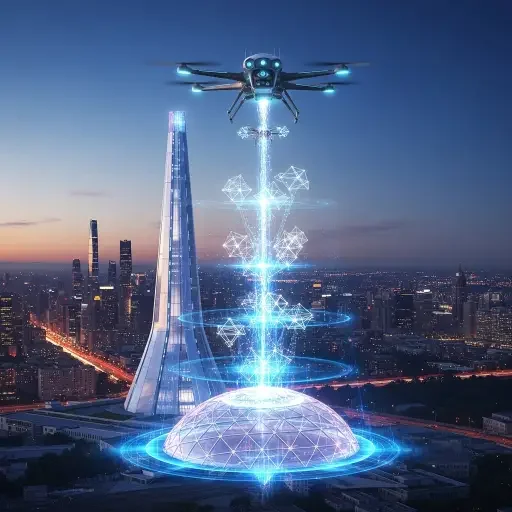
By aligning architecture with cognition, Europe is not merely buying time; it is shaping decision tempo. The Michelangelo Dome reduces uncertainty at the edge of control. It distributes it across layers, across suppliers, across ministries. It turns a red line into a living system—a sovereign instrument that can adapt, justify, and endure. The rest, for investors and observers, is arithmetic: scalable, maintainable, defensible. The rest is architecture. The rest is Europe’s collective effort to keep the sky from becoming a free-for-all—and to do so with a style that would make even Leonardo pause, tilt his head, and approve the geometry.
Tags
Related Articles
Sources
Interviews with defense procurement officials, open-source defense-tech analyses, historical studies of Iron Dome, European industrial policy papers, and expert commentary from security think tanks.