
The bail landscape is not a mere backdrop to crime and punishment; it is a market in which risk is priced, technology is a competitor, and lawmakers move like shareholders at a quarterly meeting. The salvo in this season’s policy wars is blunt: outlaw cashless release. The premise is simple to articulate, even as the consequences unfurl in complex economic weather. If you cannot post bond or secure release through digital means, the bargaining wall shifts. The defendant’s leverage recedes. The prosecutor’s incentive structure mutates. And the jail’s daily arithmetic—beds, staff, and processing time—reconfigures itself around a new tempo.

Why this matters beyond headlines? Cashless release has been a quiet engine of plea speed. In jurisdictions where bonds can be wired, QR’d, or auto-funded, the speed of release translates into faster court calendars, lower pretrial detention costs, and more predictable detention ceilings for counties and sheriffs. But speed is a luxury if it’s paid with equity questions elsewhere: who pays for the processing, the risk underwriting, and the equal protection promises that ensure the system isn’t trading in haste for bias.
The policy turn—often framed as a public safety concern or a fairness argument—poses a bifurcation: you either constrain cashless pathways or you retool the entire bail ecosystem around cash, collateral, and accessibility. The first option creates a binding, if inefficient, floor: expensive, slower release, with more defendants lingering in pretrial custody. The second option invites a rapid rebalancing of court calendars, defense strategy, and commercial bail services, because the bottleneck migrates from digital pipelines to physical desks, dock times, and courtroom calendars.
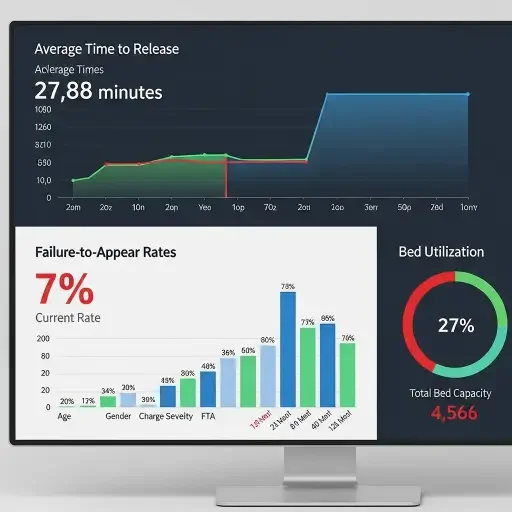
From the bench to the balance sheet, the effect ripples through three layers of the system. First, bargaining dynamics. When cashless options shrink, defendants who cannot afford high-velocity bonds find themselves offered longer or more favorable plea terms to avoid detention risk. Prosecutors, who previously faced pressure to offer swift, minimal-bail deals to clear crowded dockets, may recalibrate toward risk-based concessions that emphasize case-merit rather than liquidity. Defense attorneys, in turn, sharpen their leverage around alternative protections—supervised release, electronic monitoring, or non-monetary conditions—building a counter-economy that aligns with a more cash-sparse model.
Second, jail and court operations. Pretrial detention becomes a more meaningful cost driver for agencies, not just a civil rights concern. Jails must juggle bed capacity with throughput, all while managing the operational overweight of manual processes. The risk of backlogs grows when release channels joust with the pace of arraignments and plea negotiations. In some places, this pressure is already channeling investment into non-monetary release programs, risk assessment tools, and vendor partnerships that offer alternatives to cash-based release—yet with guardrails designed to reduce bias or discrimination in decision-making.
Third, the market for release technology—think fintech-friendly bonds, guarantee platforms, and monitoring services. If cashless pathways retreat, vendors pivot toward infrastructure for non-monetary release and risk-based supervision. The economics shift: revenue from processing fees decreases while the need for robust risk management, compliance, and user accessibility rises. In an economy where the cost of a misstep—detention error, miscalculation of risk, or a violated condition—can be measured in public trust as much as dollars, the strategic emphasis moves toward transparent, auditable, and scalable models.

What, then, is the center of gravity for this reform-era drama? It hinges on two questions: who bears the cost of risk and how information flow is orchestrated across actors. If the system can reallocate that burden—through supervised release, digital monitoring, and non-monetary guarantees—without signaling a wholesale retreat from public safety, then the plea bargaining equilibrium can stabilize in a way that preserves fairness and volume. If not, the system could drift toward more prolonged detentions or a brittle, vendor-dominant release ecology that undermines equal access.
From a strategic investor’s lens, the bail wars resemble an evolving asset class: pretrial risk, detention capacity, and release velocity. The institutions that survive will be those that can translate legal risk into operational clarity—cheaper processing, faster turnarounds, and auditable outcomes. The losers will be those tethered to fragile cash-based appetites, exposed to volatility in court calendars and public sentiment.

The takeaway is not merely procedural. It is a narrative about design under constraint: when cashless release is curtailed, the courtroom economy resets, and plea deals become more instrument than instinct. The system’s integrity, in this telling, rests on transparent constraints, disciplined risk management, and a public record that those constraints were applied to protect fairness as well as efficiency.
In closing, the new bail wars are less about who wins a particular case and more about who entrenches a sustainable, rights-preserving workflow under pressure. The chessboard has shifted: monetary gates narrow, while the reach of policy logic—algorithms, monitors, and humane constraints—expands. The outcome will hinge on how quickly and cleanly the actors can rewire incentives, preserve access to justice, and maintain the tempo that keeps courts moving without sacrificing the very due process that legitimacy demands.

Tags
Related Articles
Sources
Policy memos, court filings, and industry briefings; interviews with prosecutors, defense attorneys, and bail technology vendors.