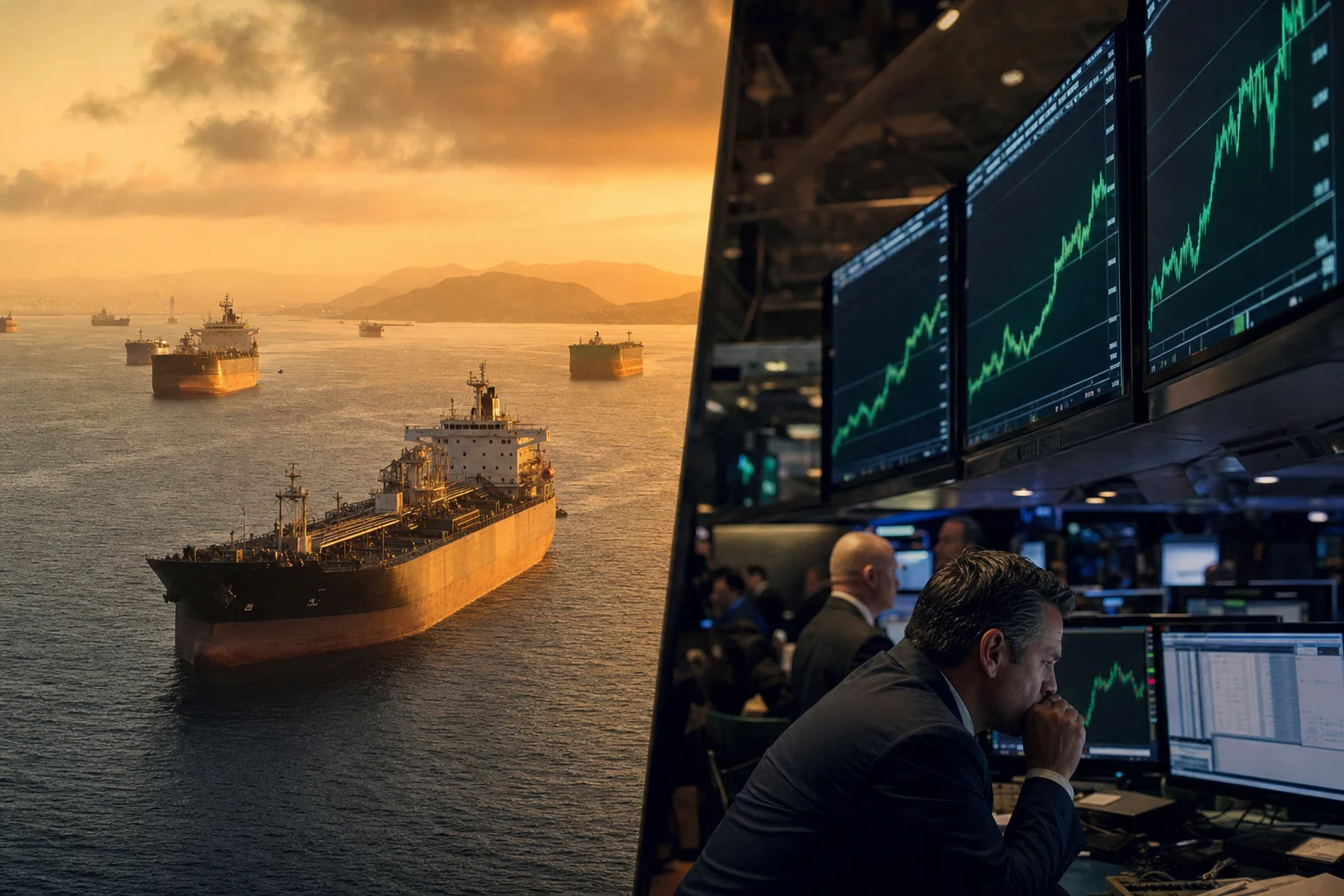
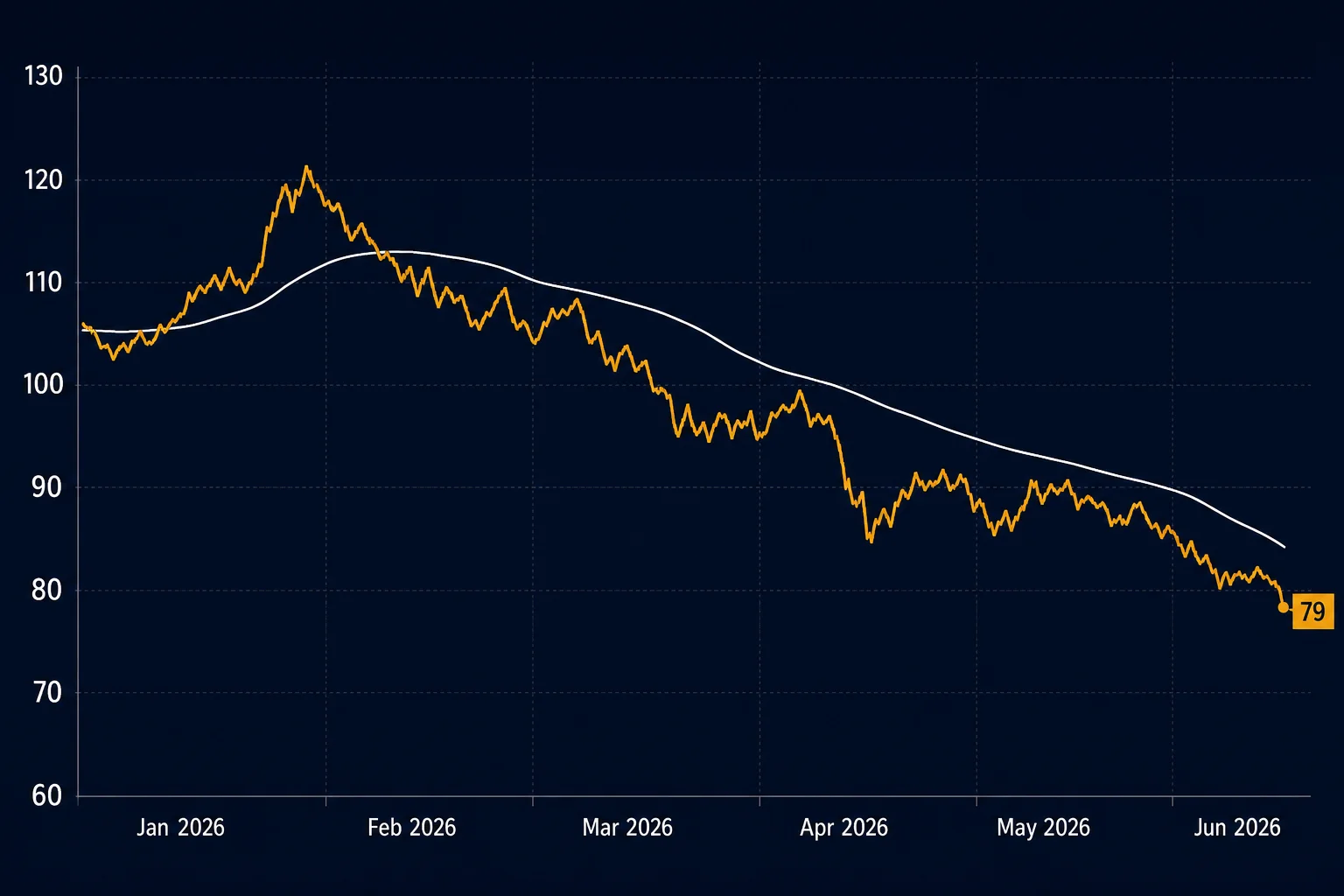
On Wednesday evening at the Palace of Versailles, Donald Trump signed a fourteen-point memorandum of understanding with Iranian President Masoud Pezeshkian — the most significant diplomatic development since the U.S.-Israel war on Iran began in late February. Brent crude, which peaked near $120 during the conflict, settled below $79 on Thursday morning. Global equities rallied. Trump declared on Truth Social that ships should “start your engines” and “let the oil flow.”
The market’s answer to whether this is all clear is yes, emphatically, and in advance of the evidence. That is not irrational. It is how commodity markets behave when a four-month supply shock appears to be ending. The question is whether the physical world will confirm the financial one before the next risk checkpoint arrives on Friday.
The Market Front-Ran the Strait
Oil’s collapse tells you what traders believe, not what tankers are doing. Brent has fallen nearly 40% from its war peak to its lowest level since early March. West Texas Intermediate dropped below $76 after U.S. officials released the MoU text, which commits Iran to reopen Hormuz and Washington to lift its naval blockade, with implementation talks opening Friday at Switzerland’s Buergenstock resort.
Markets are pricing the best case: immediate Iranian exports, stranded Gulf tankers returning to transit, and a conflict premium that evaporates as fast as it appeared. The IEA reinforced the bearish case, warning supply could rise eight million barrels per day against demand growth of only two million. The inflation relief is equally real — every dollar off Brent flows through to gasoline and the CPI prints that had markets bracing for stagflation.
What the MoU Contains — and What It Defers
The memorandum is a framework, not a treaty. Both sides committed to ending military operations on all fronts, including Lebanon. Iran pledged not to develop nuclear weapons. Washington agreed to up to $300 billion in reconstruction funding, immediate oil-export waivers, and gradual sanctions relief.
What it defers is harder. Uranium enrichment, inspection protocols, and sanctions timing remain contested. Republican hawks, including Mike Pence, have compared the deal to “Obama-style appeasement.” Trump warned military action remains possible if Iran violates the accord. Israel is not a signatory — it struck southern Beirut hours before the Versailles signing, drawing Trump’s public criticism. Iran’s parliament speaker Mohammad Bagher Ghalibaf said Hormuz “will not return to pre-war conditions” and that Tehran retains the right to charge transit fees after a 60-day toll-free window.
The Ships Have Not Started Their Engines
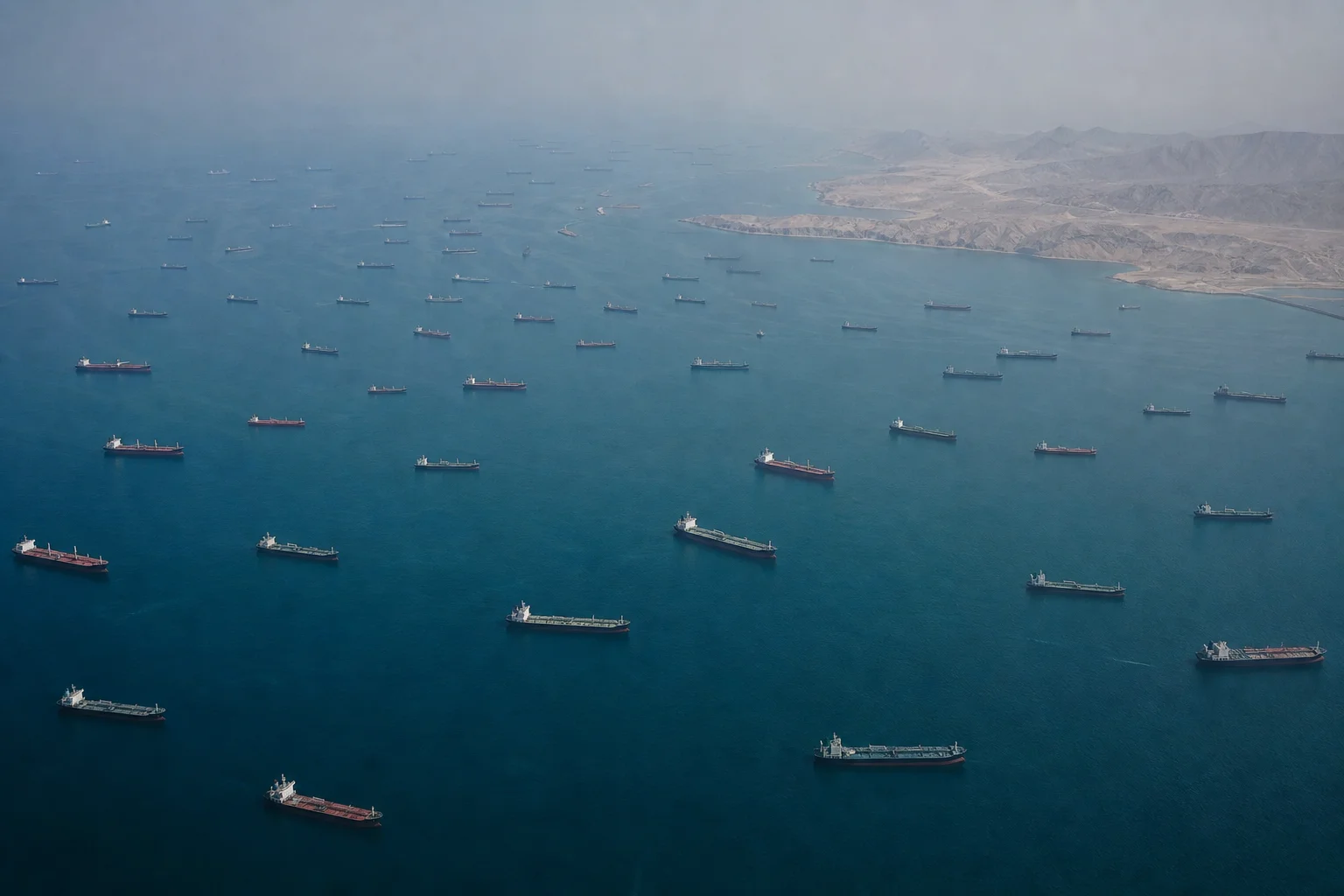
This is where optimism meets maritime reality. More than one hundred oil-laden vessels remain stranded in the Persian Gulf. Full normalization could take weeks — mine clearance, insurance repricing, and shipowner confidence must recover before transit returns to pre-war volumes near 100 ships daily.
A U.S. official said roughly 25 commercial vessels are transiting a southern route off Oman daily, with full reopening expected Friday. The International Chamber of Shipping was less sanguine: operators need more than a social media declaration before routing billion-dollar cargoes through a waterway that was a missile target for four months. Mitsui OSK Lines’ chief executive told the Financial Times many operators would wait weeks even after a signed agreement. Markets have front-run the reopening. Physical supply has not yet followed.
Where Portfolios Stand Now
The honest answer to “all clear?” is: not yet, but directionally yes — with a fat tail of implementation risk.
Equity relief trades have room if Friday’s Buergenstock ceremony produces visible tanker movement and no Israeli escalation in Lebanon. Airlines and consumer discretionary names benefit; energy shorts are the obvious play. The downside tail is substantial: failed implementation, an Israeli strike, or Iranian tolls could send Brent back above $90 within days.
A secondary signal emerged from the G7 in Évian. With Hormuz oil flowing, Trump indicated sanctions on Russian energy exports — waived during the Iran crisis — can return, shifting pressure toward Moscow as Ukraine launches its largest drone assault on the capital in years. The Iran deal does not end geopolitical risk. It reallocates it.
Markets priced peace before the strait opened, and that is their job. The MoU is real, the oil crash is real, and the inflation relief is real. What remains unreal is crude moving through Hormuz at scale — and the 60-day clock, which begins not when traders celebrate but when ships sail. Until then, the rally is a forecast, not a fact. Friday is when the condition gets tested.
Tags
Sources
Al Jazeera, BBC, CNBC, NPR, Japan Times, France 24, Trading Economics, IEA, Élysée G7 communiqué, Independent live coverage