

Governance as Information Architecture
In the modern economy, governance is no longer a ceremonial curtain behind which leadership pretends to be orderly. It is the ductwork through which information travels from data streams to human belief. When markets, employees, and communities demand not just outcomes but verifiable alignment with stated values, governance becomes an information architecture—carefully designed, relentlessly audited, and ruthlessly clear about trade-offs. This is governance as information alchemy: a process that transforms raw signals into credible social coordinates.

Trust Through Uncertainty Reduction
The premise is simple, and dangerous in its simplicity: trust is earned by reducing uncertainty. But uncertainty is not annihilated by charm or motto; it is managed by systems that make the unseen visible. Transparent reporting, credible accountability, and consistent narratives are not vanity metrics—they are the core apparatus by which stakeholders calibrate risk, allocate resources, and decide whom to believe. In practice, governance must translate complex realities into a language that different audiences can hear: a shareholder who reads an earnings call, a frontline employee who watches for safety cues, a regulator who audits compliance, and a citizen who weighs the social license to operate.
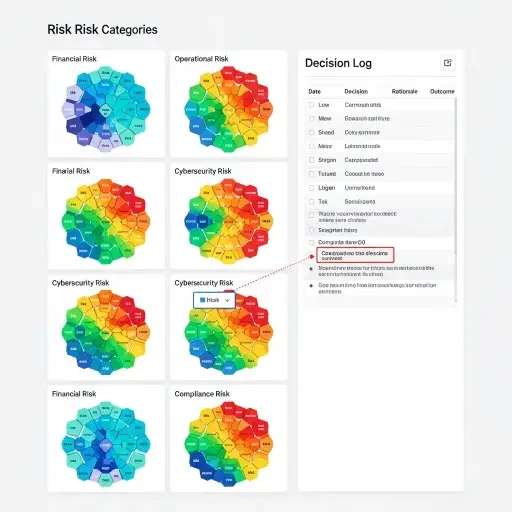
To navigate this translation, leaders design multi-layer information channels. At the top level, governance narratives set the horizon: what is the organization’s purpose, what risks loom, and what commitments are being measured. In the middle, performance dashboards translate those commitments into measurable indicators, with explicit definitions, data provenance, and confidence levels. At the base, operational specifics show the daily work through which policy becomes practice: risk controls, audit trails, incident reports, and decision logs. Each layer serves a different cadence of attention, yet all must harmonize to prevent cognitive fragmentation.
The Design of Provenance
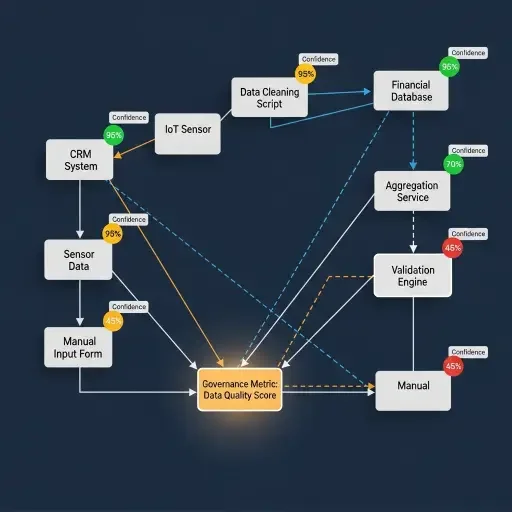
One essential pattern in this architecture is the deliberate design of provenance. Knowing where data comes from and how it’s aggregated matters as much as the numbers themselves. A metric without a source is a rumor; a KPI with a documented lineage becomes a compass. This is not pedantry; it is a mechanism to weather political and market storms when the data flickers under pressure. The rule of thumb: every critical metric should be paired with (1) a methodology note, (2) a data lineage map, and (3) an audit or third-party verification when possible. The more layers of verification you can responsibly attach, the more resilient the trust you cultivate.
Calibrated Transparency
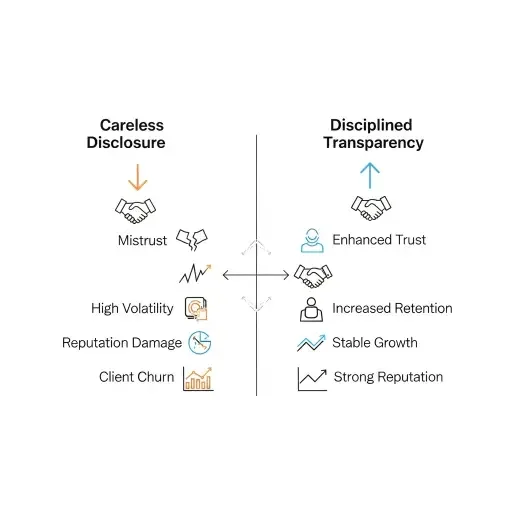
Transparency, properly engineered, is not about exposing every grain of data to every audience. It is about calibrating visibility to reduce misinterpretation while preserving strategic confidentiality. The most effective governance disclosures are not walls of text but structured capsules: short, precise updates about what is known, what is uncertain, what is being done, and why. The public narrative should be a living dashboard of accountability—translated for lay readers, with the same veracity preserved that professionals demand. Investors seek signal; workers seek safety and fairness; regulators seek compliance; communities seek redress. A governance system that communicates with all these audiences at once earns trust through coherence, not through chest-thumping transparency.
Yet transparency without control breeds fragility. If every decision is publicly exposed in real time, organizations may overreact to outliers, and the culture of risk-taking can atrophy. The art is to couple openness with disciplined guardrails: staged disclosures, controlled granularity, and clear escalation paths. The aim is not to dampen legitimate surprises but to ensure that when surprises occur, they are interpreted within a credible framework—not as evidence of incompetence, but as data points inside a larger, well-communicated strategy.
In practical terms, governance as information design requires three operational engines: credible data governance, narrative discipline, and auditable accountability. Data governance defines who owns data, how it’s collected, how quality is verified, and how access is governed. Narrative discipline ensures that the organization’s story is consistent across channels, with mechanisms to update that story as conditions change. Accountability creates verifiable consequences for decisions—whether financial, reputational, or operational—so that trust is rewarded with predictable behavior.
The investor angle is instructive. Capital allocators increasingly value governance as a risk indicator—an early warning signal when data pipelines show erosion, when disclosures drift, or when accountability structures appear hollow. The metrics that matter are not only loss margins or growth rates, but the durability of trust: how quickly a company acknowledges a fault, how clearly it communicates remediation, and how its governance architecture adapts under stress. In a crowded market, credible governance differentiates those who merely perform well from those who perform reliably over time.
Building Trust at Scale
This essay is not a manifesto about virtue signaling. It is a guide for the present tense: the practical construction of trust in systems where information is abundant, but certainty remains asymmetric. Governance, at its best, does not pretend to eliminate risk; it orchestrates it—aligning incentives, clarifying expectations, and creating verifiable bridges between data and decision. The art lies in presenting a transparent map that people can navigate even when the terrain shifts—one that invites scrutiny, withstands attack, and, crucially, accelerates collaboration.

If we take governance as information design seriously, the implication for leadership is clear: invest in the architecture that makes truth scalable. Build data lineage into the fabric of governance; codify disclosures into digestible capsules; insist on audit-ready narratives that can travel across audiences without distortion. When information is transformed into trust through disciplined design, organizations don’t merely survive scrutiny—they thrive because their truth is legible, durable, and shared.
Endnote: in practice, every governance system is a work-in-progress, a continuous loop of data, interpretation, and revision. The best programs are not perfect but responsive—capable of reflecting new evidence, adjusting strategies, and preserving the integrity of the trust they claim to uphold.

Tags
Related Articles
Sources
Synthesis of public filings, governance reports, investor briefings, and expert commentaries.