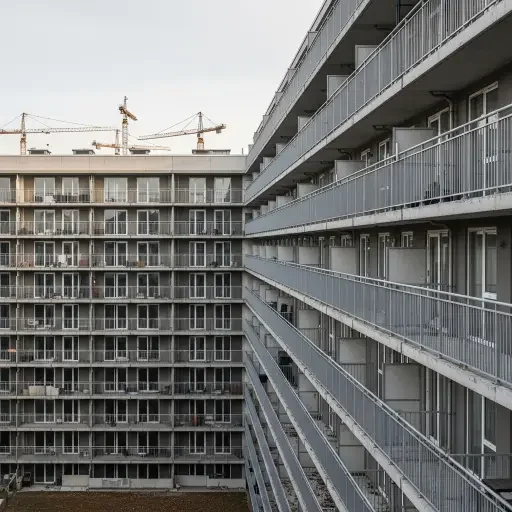
A decade-long property binge ended with a quiet but unequivocal verdict: in the long run, real estate reflects not merely a city’s appetite for space but the cadence of a nation’s credit, demographics, and belief. China, with its 90 million vacant or unsold apartments, has drafted a headline that’s more an index than a single statistic. It’s a structural echo—of overhangs and deferrals, of debt-saturated developers, of buyers who paused at the threshold and never crossed back. The vacancy is not merely vacancy. It is a symptom cluster: cooling demand, policy recalibration, and the potential for cross-border reverberations that financiers, manufacturers, and policymakers watch with a wary eye.
This is not a simple housing malaise; it is a calibration of incentives. Local governments rewarded land sales, developers leveraged once-cheap financing, and households trade speed for security—preferring smaller, steadier plays to grand, levered dreams. Now, as loan performance tightens and construction slows, the housing stock becomes a ledger line: debt service, local government financing vehicles, and the shadow of price adjustments that may creep rather than crash. In that slow-motion arithmetic, the global economy senses a shift in investment psychology.

Two dynamics dominate the field: the inventory overhang and the capital reallocation it forces. First, inventory. Even where buyers exist in micro-niches—second homes, migration corridors, or urban clusters with expanding job pools—the psychology of the market has altered. Homebuyers adopt a wait-and-see stance; developers run smaller, more conservative projects; banks transition from rapid lending to risk-weighted diligence. The result is a slower velocity of money in a country-sized real estate machine, which means less construction activity, fewer commodity inputs, and a drag on adjacent sectors—from home furnishings to cement demand.
Second, capital reallocation. Where previously a wave of credit pushed land auctions, developers turned to pre-sale models that monetized prospective sales in advance. With those streams constrained or priced with higher risk premia, the sector’s appetite shifts toward revenue durability over growth spirals. That pivot sends signals across international markets: Chinese buyers and lenders alter the flow of funds, exporters recalibrate to a slower domestic cycle, and foreign investors pivot to hedges or shorter-duration exposures. The wealth effect cools, and with it, the global appetite for risk-on bets tied to Chinese growth trajectories.
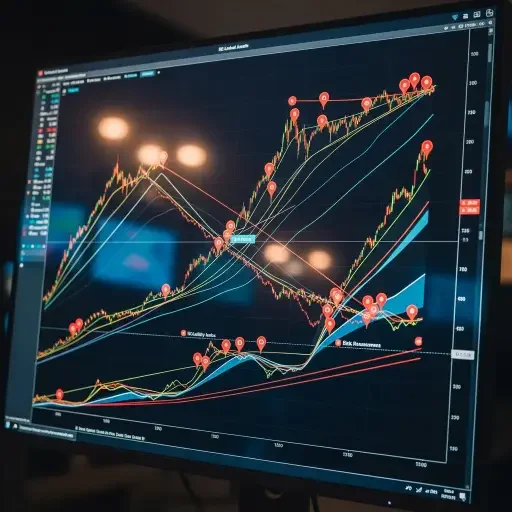
But the story is not purely deleterious. The policy response—documented in minutes and speeches across municipal and national layers—shows a deliberate re-centering: stabilize already-built stock, avoid disorderly price declines, and gradually ease credit conditions where viable. The policy playbook now emphasizes density over velocity: align land-use with population flows, convert vacant inventory into affordable housing or urban renewal projects, and widen the financing toolbox to prevent a curb-stomp in employment and consumer confidence. If successful, the policy design can decouple volatility from systemic risk and turn a potential bust into a managed adjustment.
Yet the global system remains a substrate of nerves. Commodity markets, industrial suppliers, and global consumers all price China’s housing cycle into asset valuations and growth forecasts. A slow housing market reduces demand for copper, steel, glass, and lumber. It cools manufacturing orders and delays capex that would otherwise ripple into global supply chains. For financial markets, the message is nuanced: not a collapse, but a recalibration—lower leverage, slower reflation, greater emphasis on balance-sheet resilience. The challenge for investors is to discern the lag between policy actions and market responses, and between vacancy rates and consumer demand signals that follow a different timing.
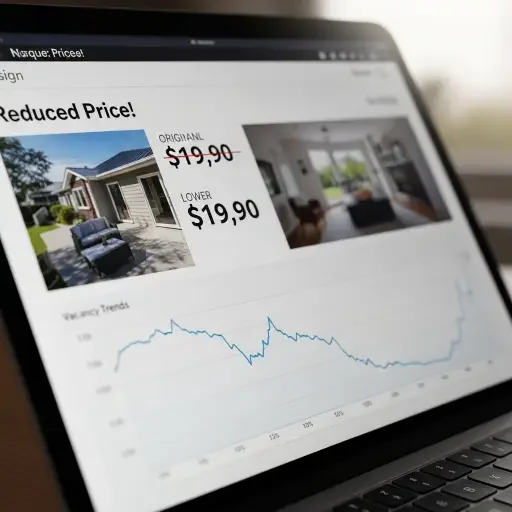
Historically, major slowdowns in one large economy have a predictable half-life: voiced by policymakers, amplified by financial markets, and mediated by capital flows that seek the next reliable axis of growth. If China’s vacancy stock becomes a structural feature rather than a temporary fuel for a debt-addicted boom, global growth could adopt a softer baseline. The question then becomes: which engines will compensate? Infrastructure upgrades in other regions, technology-enabled productivity gains, and a reorientation of consumer demand toward services in mature economies all contend for the “growth baton.” The immediate fear—deflationary impulses and tighter credit—loses some of its sting if policy responses succeed in transforming vacancy into a reliable, low-latency pathway to revitalization.
In boardrooms and asset-allocation meetings, the vacancy statistic invites a baton-passing exercise: which segments gain resilience, which fade, and where the real risks lie. For property developers in other markets, the message is cautious optimism—room to redraw risk premium and to push inventory into more productive uses. For commodity traders, a new tempo appears: slower but steadier demand, with a premium on timing and supply chain visibility. For policymakers, the imperative is to decouple, to reframe risk, and to preserve confidence without inflating new risk-taking.

Endnotes—extracting the actionable throughline: vacancy is a diagnostic, not a verdict. It invites policymakers to finish what markets began: reallocate capital to productive, sustainable uses; institutional investors to differentiate between cyclical drag and secular drift; and the global audience to recalibrate expectations for the year ahead. The 90 million empty apartments are not merely a local stress test; they are a macro instrument in the hands of a world economy that learns slowly, adjusts, and then moves forward with renewed, if tempered, resolve.

As a closing analytic checksum: vacancy rates in a single housing market can calibrate the tempo of global growth, not dictate its fate. The question is not whether the rooms will ever be filled, but how quickly the system can reallocate the memory of scarcity into the architecture of expansion. In that transfer—between unoccupied spaces and the investments that would animate them—lies the current hinge of global risk and opportunity.

Tags
Related Articles
Sources
Central bank minutes, housing data from Chinese statistical authorities, brokerage house notes, peer-reviewed analysis on real estate cycles, IMF and World Bank macro briefs.